CANON 5: A judge or judicial candidate shall refrain from inappropriate political activity.
CANON 2: A judge shall avoid impropriety and the appearance of impropriety in all of the judge’s activities.
-- Model Code of Judicial Conduct, 2004 Ed.
The Myth of Judicial Impartiality
Louisiana Supreme Court Chief Justice Pascal L. Calogero, Jr., in his April 8, 2008 address to the State Legislature, reassured lawmakers and the public that "The ranks of Louisiana judges are filled, for the most part, with hard-working, competent, ethical, honest jurists who take their constitutional responsibilities very seriously, as do you Legislators. They are dedicated public servants who routinely act without selfish motives." [1] These and similar assertions of judicial integrity that are repeatedly employed to indoctrinate citizens are contradicted by factual realities substantiated through formal, objective methods of quantitation. One such analysis is the 2008 report of Vernon V. Palmer and John Levendis which clearly demonstrates that Justice Calogero was significantly influenced, as were other Louisiana judges, by financial contributions that were made to his election campaigns [2]. Justice Calogero has dismissed the Palmer-Levendis study as "baseless." [3]
Following publication of the Palmer-Levendis report in the Tulane Law Review, attorneys from the venerable New Orleans law firm of Christovich & Kearney prepared a rebuttal that challenged the report's conclusions on the basis of alleged flaws in data collection and methodology [4]. Palmer and Levendis acknowledged that there were some technical errors and stated that they will be addressed in a published erratum to their initial report, but that the errors were minor and did not alter the study's conclusions [5]. Tulane has enjoyed a "constructive relationship" with the Court through many administrations, and the university was clearly embarrassed by the findings of the Palmer-Levendis report and the controversy it engendered. Tulane Law Professor and Dean, Lawrence Ponoroff, tendered a contrite apology to the Court [6], resigned as Dean of the Law School [7], and nine months later announced his move to the University of Arizona [8].
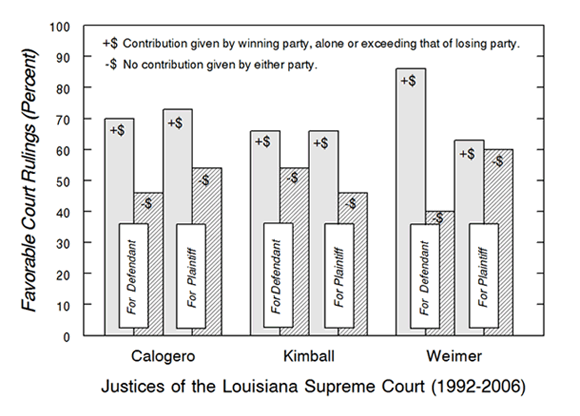
Immediately below is Tulanelink's 2008 graphical depiction of Palmer and Levendis' original findings. This is followed by Palmer's 2010 graphical depiction of the revised findings. In a rare display of enlightenment, the Supreme Court in 2014 disciplined a judge for accepting an all-expense-paid trip to a hunting ranch from an attorney whose client was awarded a $1.2 million settlement in a personal injury lawsuit tried in the judge's court.
Analysis of the Votes of Justices Calogero (176 cases), Kimball (176 cases) and Weimer (43 cases), from the original Palmer-Levendis Report [2].
Data taken from Table 3 of Palmer and Levendis [2].
The authors provide the following discussion:
The data in Table 3 permit
us to conclude that the effect of being
the higher net contributor has a significant effect on the votes cast by
Justices Calogero, Weimer, and Kimball. In cases where the defendant
happened to be the net contributor (i.e., the defendant's contribution
was larger than the plaintiff's or the plaintiff made no donation at all),
Justice Calogero ruled in favor of the defendant's position 70% of the
time. Justice Weimer ruled for the defendant's position 86% of the
time, and Justice Kimball did so 66% of the time. On the other hand,
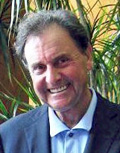
Vernon V. Palmer (Courtesy: Tulane Univ.)
in cases where the plaintiff was the net contributor (i.e., where the
plaintiff made a larger donation than the defendant), the voting pattern
shifted markedly. Justice Calogero favored the plaintiff's position 73%
of the time. Justice Weimer ruled in favor of the plaintiff's position
63% of the time, and Justice Kimball did the same 66% of the time.
This high correlation in favor of the net contributor indicates that the
higher the donation, the more favorable the treatment. It is unlikely
that this has anything to do with philosophical orientation, because the
judicial voting pattern of each justice shifts from being plaintiff-oriented
to defendant-oriented, depending upon which side has made
the larger donation. Furthermore, this stands in evident contrast to the
voting patterns of these same justices when no contributor is before
them. The comparison between their no-contributor
voting and net-contributor
voting in favor of defendants shows a significant variation
in voting behavior—a 24% differential for Justice Calogero, a 12%
differential for Justice Kimball, and a 46% differential for Justice
Weimer. The comparison between their defendant net-contributor and
plaintiff net-contributor voting records shows more extreme variation:
a 43% swing by Justice Calogero, a 32% swing by Justice Kimball,
and a 49% swing by Justice Weimer.
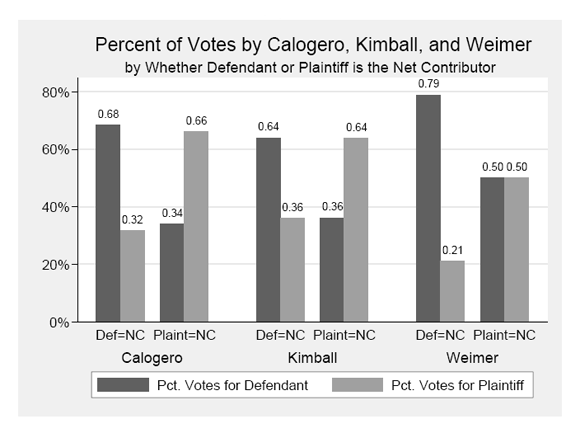
The heated controversy generated by the Palmer-Levendis report within legal circles led Palmer to reaccess his findings. During a two-year period following its initial publication, Palmer scrutinized the data for errors while "statistical calculations based on the data were verified and replicated by the Center for Emperical Research in the Law in St. Louis." In the final analysis, "the overall conclusions of the first study remain unchanged." [9] The graphical analysis below is from Palmer's revised and expanded report [10].
Palmer's Revised Analysis (His Figure 1a) of the Votes of Justices Calogero, Kimball and Weimer (NC=Net Contributor) [10].
Data are from Palmer's Table 3b [10].
The author provides the following discussion:
According to the data in Table 3b, where
the defendant happened to be the net contributor (i.e., defendant’s contribution
was either larger than plaintiff’s or defendant made the only donation), Justice
Calogero ruled in favor of the defendant’s position 68% of the time. In similar circumstances
Justice Weimer ruled for the defendant’s position 79% of the time, and Justice Kimball
did so 64% of the time. On the other hand, in cases where the plaintiff happened
to be the net contributor (i.e., plaintiff made a larger donation than the defendant or
plaintiff made the only donation), the voting pattern shifted in the opposite
direction. Justice Calogero now favored the plaintiff’s position 66% of the time.
Justice Weimer ruled in favor of the plaintiff’s position 50% of the time, and
Justice Kimball did so 64% of the time. This high correlation in favor of the net
contributor creates the appearance (reinforced by the probabilities) that the higher
the donation, the more favorable the treatment. It is unlikely that this could have
anything to do with philosophical orientation, because the justices seem to shift
from being plaintiff-oriented to being defendant-oriented, apparently on the basis
of which side has made the larger donation. The swings in this voting behavior
are symptomatic of the risk: There is a swing of 34% for Justice Calogero, 28%
for Justice Kimball, and 29% for Justice Weimer. Figure 1a [above] graphically
illustrates these "swings." The evidence may suggest an unacceptable risk of
actual bias under the due-process standard articulated in the Caperton case. The
data in Table 3b for Justices Calogero and Kimball are within the range of
statistical significance.
[Tulanelink is flattered that Prof. Palmer would adapt its graphical style for presenting his revised data.]
In 2002, Calogero announced the formation of the Judicial Campaign Oversight Committee, whose purpose is to educate judges and judicial candidates about ethical campaign conduct [11].
In 2002, the Times-Picayune reported that Judge Weimer had spent about $561,000 in campaigning for his seat to the high court, and that Judge Calogero had spent $1.09 million to retain his in 1998 [12].
The ability of money to create indebtedness is inescapable. It is not surprising that contributions can sweeten a judge's attitude toward a party who offered a helping hand at a time of elective uncertainty.
“Justices are constitutionally and ethically bound to decide cases on the law and the facts before them. Their votes are not based on the contributions of attorneys who appear before them, nor on the contributions of the clients these attorneys represent.” [13]
Pascal F. Calogero, Jr. Chief Justice, Louisiana Supreme Court February 6, 2008
Justice Calogero did not dispute the study's conclusion that justices “continually decide cases involving their own donors without recusing themselves. That right there is the most important part of the study.” [14]
Vernon V. Palmer Professor, Tulane Law School June 13, 2008
In 1993, the Times-Picayune newspaper filed a lawsuit to compel Tulane University to disclose the recipients of its legislative scholarship program. Three of Justice Calogero's sons were found to have received legislative scholarships to attend Tulane, which was reluctant to disclose the names of the recipients and the elected officials who granted them [15].
When the Times-Picayune's earlier case against the legislators had progressed to the State Supreme Court, Calogero would not recuse himself. Instead, he joined the majority who refused to review the lower court's ruling that favored the legislators' desire to shield their records from public view [16]. Calogero, who chaired the state court's Judicial Ethics Committee [17], said there were no "legal" grounds for recusing himself [16].
In 2009, the U.S. Supreme Court considered the case of Caperton v. Massey Coal Co., which focused on the disqualification of West Virginia Supreme Court Justice Brent D. Benjamin, who was elected to his seat with the aid of more than $3 million in campaign contributions from the CEO of Massey Energy, the parent company of Massey Coal Co. Benjamin, who refused to disqualify himself from the appellate case, cast the pivotal vote in a 3-to-2 majority to dismiss a $50 million verdict against Massey and claimed that his judgment was based solely on the merits [18].
On June 8, 2009, in a surprising 5-4 decision, the Supreme Court ruled in favor of Caperton and against Massey [PDF], leading some observers to predict a flood of new appeals from litigants claiming a biased judge [19].
The case was remanded to the West Virginia Supreme Court to be reheard, this time without Chief Justice Brent Benjamin. Four of the five justices were new but nevertheless ruled 4-1 in favor of Massey and against Caperton [20]. In a dissenting opinion, Justice Margaret L. Workman issued a scathing indictment of her fellow justices [PDF]. Hugh Caperton has planned another appeal to the U.S. Supreme Court, this time for a consideration of his case on the merits.
A 2010 survey of court systems by the Institute for Legal Reform, an affiliate of the U.S. Chamber of Commerce, ranked Louisiana 49th among the states, ahead only of West Virginia. Since 2002, Louisiana has never been ranked above 47. Biased judges were cited as the major area of concern among respondents [21]. The Louisiana State Bar Association has questioned the methodology and results of the study [22].
New York State is planning the forced recusal of judges for a period of two years from cases involving individuals who have donated $2,500 or more to their election campaigns, or firms that have donated $3,500 or more. The plan, however, does not extend to judges who are subsequently appointed to New York's Appellate Court or to New York City judges who are currently appointed [23].
"The rule is a well thought-out approach that is necessary to address the perception of the undue influence of campaign contributions in judicial decision-making" [23].
In Indianapolis, The reelection flier of Superior Court Judge Becky Pierson-Treacy implied that a campaign contribution of $1,000 would result in favorable court rulings. The judge should be commended for bringing what is common knowledge in legal circles to the wider attention of the public [24].
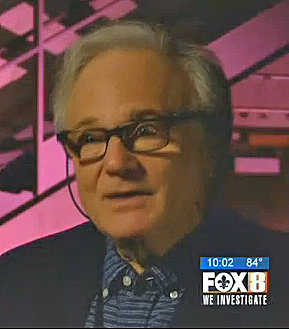
Joel Friedman [25]
In 2016, Tulane Law Professor Joel Friedman expressed outrage upon learning that attorneys for Helis Oil had contributed to the election campaign of Louisiana Supreme Court Justice Marcus R. Clark at a time when they were defending their client in that high court [25].
Friedman, who taught at Tulane since 1976, never publicly expressed any outrage when fellow Law School faculty member Judge Helen "Ginger" Berrigan adjudicated a case brought against Tulane during 1995 to 2001, was paid $5,500 to teach a seminar course in Greece, and refused to recuse herself despite protests against her obvious conflict of interest and conspicuous partisanship toward the defendant university.
Louisiana Supreme Court, "State of the Judiciary Address to the Joint Session of the House and Senate Louisiana Legislature by Pascal F. Calogero, Jr., Chief Justice, Supreme Court of Louisiana," 2008 Press Releases, April 8, 2008, http://www.lasc.org/press_room/press_releases/2008/2008-07.asp, accessed 04/20/08.
Vernon V. Palmer and John Levendis, "The Louisiana Supreme Court in Question: An Empirical and Statistical Study of the Effects of Campaign Money on the Judicial Function," Tulane Law Review, Vol. 82, Issue 4, 1291-1314 (2008).
Louisiana Supreme Court, "Statement of Chief Justice Pascal F. Calogero, Jr., Louisiana Supreme Court," 2008 Press Releases, June 12, 2008, http://www.lasc.org/press_room/press_releases/2008/ Statement_of_Chief_Justice_Calogero_June_12_2008.pdf (delete space), accessed 07/18/08.
See also: Susan Finch, "Angry chief justice disputes study of court; Campaign donor bias charge invalid, he says," The Times-Picayune, New Orleans, July 11, 2008, Metro, p. 8. See also: Pascal F. Calogero, Jr., "Bashing judges was easy, but it wasn't fair" [Letter] The Times-Picayune, New Orleans, September 23, 2008, Metro, p. 6.
E. Phelps Gay and Kevin R. Tully, "Rebuttal of 'The Louisiana Supreme Court in Question: An Empirical and Statistical Study of the Effects of Campaign Money on the Judicial Function'," June 12, 2008. Source: Louisiana Supreme Court, 2008 Press Releases, September 15, 2008, http://www.lasc.org/press_room/press_releases/2008/2008-17.asp, accessed 09/16/08.
See also: Robert Newman, Janet Speyrer and Dek Terrell, "Critique of 'The Louisiana Supreme Court in Question: An Empirical and Statistical Study of the Effects of Campaign Money on the Judicial Function'," June 12, 2008. Source: Louisiana Supreme Court, 2008 Press Releases, September 15, 2008, http://www.lasc.org/press_room/press_releases/2008/2008-17.asp, accessed 09/16/08." The above (unpublished) Rebuttal and Critique were apparently prepared at the behest of the Louisiana Supreme Court and distributed by the Court through its Web site.
Susan Finch, "Law dean writes of regret over errors; Author stands by article's conclusions," The Times-Picayune, New Orleans, September 17, 2008, Metro, p. 1.
As of March 23, 2010, Dr. Palmer's revision, "The Louisiana Supreme Court in Caperton's Wake: An Empirical Investigation Into the Effects of Campaign Contributions on Louisiana's Highest Court," was "still in development" (Tulane Law Library, personal communication).
Letter of September 10, 2008 from Dean Lawrence Ponoroff to the Justices of the Louisiana Supreme Court.
John Pope, "UNO is hosting regional college art conference; Tulane Law School dean steps down," The Times-Picayune, New Orleans, September 8, 2008, Metro, p. 1. See also: Scott Cowen, "Tulane Talk," Tulane University, August 27, 2008, http://tulane.edu/administration/president/tulane_talk/tt_082708.cfm, accessed 11/16/08.
John Pope, "Tulane has free screening for prostate cancer today; ... Transitions," [Higher Education Notes] The Times-Picayune, New Orleans, June 9, 2009, Metro, p. 1.
John Pope, "Tulane applies for patent to detect malaria; Also: Corrected version of 2008 article published," The Times-Picayune, New Orleans, December 20, 2010, Metro, p. 1.
Vernon V. Palmer (2010) "The Recusal of American Judges in the Post-Caperton Era: An Empirical Assessment of the Risk of Actual Bias in Decisions Involving Campaign Contributors," Global
Jurist: Vol. 10: Iss. 3 (Frontiers), Article 4 (94 pp.). Available from: The Berkeley Electronic Press, http://www.bepress.com/gj/vol10/iss3/art4, accessed 12/20/10.
Mary Swerczek, "Court runoff loser outspends winner; Becnel cash is twice what Weimer reports," The Times-Picayune, New Orleans, January 11, 2002, National, p. 3.
Pascal F. Calogero, Jr., "Justice questions campaign contribution study" [Letter] The Times-Picayune, New Orleans, February 6, 2008, Metro, p. 6.
"Supreme Court chief pans study of justices' donors," KATC, Acadiana News Channel 3," Lafayette, LA, June 13, 2008, http://www.katc.com/global/story.asp?s=8484510, accessed 09/20/08.
Susan Finch, "Justice defends role in Tulane case; 3 sons received scholarships," The Times-Picayune, New Orleans, October 15, 1995, National, p. 5. See also: Tyler Bridges, "Scholarships to insiders," The Times-Picayune, New Orleans, October 15, 1995, National, p. 13.
Susan Finch, "Incumbant justice steeped in experience," The Times-Picayune, New Orleans, September 20, 1998, National, p. 6.
"In the state," The Advocate, Baton Rouge, February 15, 1998, State, p. 6.
Oral arguments in Caperton v. Massey Coal Co., 08-22, were heard March 3, 2009 [see PDF].
Carl Bernofsky, "The New Standard is 'The Probability of Bias'," OpEdNews, June 10, 2009, http://www.opednews.com/articles/The-New-Standard-is-The-P-by-Carl-Bernofsky-090609-347.html, accessed 06/10/09.
See also: Adam Liptak, "Justices Tell Judges Not to Rule on Major Backers," The New York Times, June 9, 2009. See also: Jess 'Bravin and Kris Maher, "Justices Set New Standard for Recusals," The Wall Street Journal, June 9, 2009.
Erica Peterson and Beth Vorhees, "Caperton petitions court to rehear case," West Virginia Public Broadcasting, December 2, 2009, http://www.wvpubcast.org/newsarticle.aspx?id=12255, accessed 03/24/10.
Robert Travis Scott, "Survey: Courts in La. get low scores; State ranks low in fairness, impartiality," The Times-Picayune, New Orleans, March 22, 2010, National, p. 2. See also: Institute for Judicial Reform, http://www.instituteforlegalreform.com/lawsuit-climate.html, accessed 03/24/10, or http://www.instituteforlegalreform.com/media/press/louisiana-ranked-as-second-worst-legal-climate-in-nation, accessed 12/11/2011.
Kim M. Boyle, "Court study gave unfair view of Louisiana," [Letter] The Times-Picayune, New Orleans, April 1, 2010, Metro, p. 6.
"Judge Fundraiser Offers 'Favorable Ruling' For Donations; Some Question Flier For Judge Becky Pierson-Treacy's Campaign," TheIndyChannel.com, Indianapolis, August 19, 2011, www.theindychannel.com/news/29819720/detail.html, accessed 11/30/2011.
See also: "Judge Admonished Over Campaign Flier; Commission: Pierson-Treacy Flier Violated Code of Judicial Conduct," The IndyChannel.com, Indianapolis, November 29, 2011, www.theindychannel.com/news/29878857/detail.html,accessed 11/30/2011.
Excerpted from: Lee Zurik and Tom Wright, "La. Supreme Court justice took campaign cash from Helis," FOX 8 WVUE, New Orleans, September 21, 2016, http://www.fox8live.com/clip/12747285/zurik-la-supreme-court-justice-took-campaign-cash-from-helis, accessed 09/22/2016. Reproduced in accordance with the "fair use" provision of Title 17 U.S.C. § 107 for a non-profit, educational purpose.